Zara Müller · 25 September 2026
Analyzing the Correlation Between Mobile Usability Scores and Recovery Speed in Relocated Websites
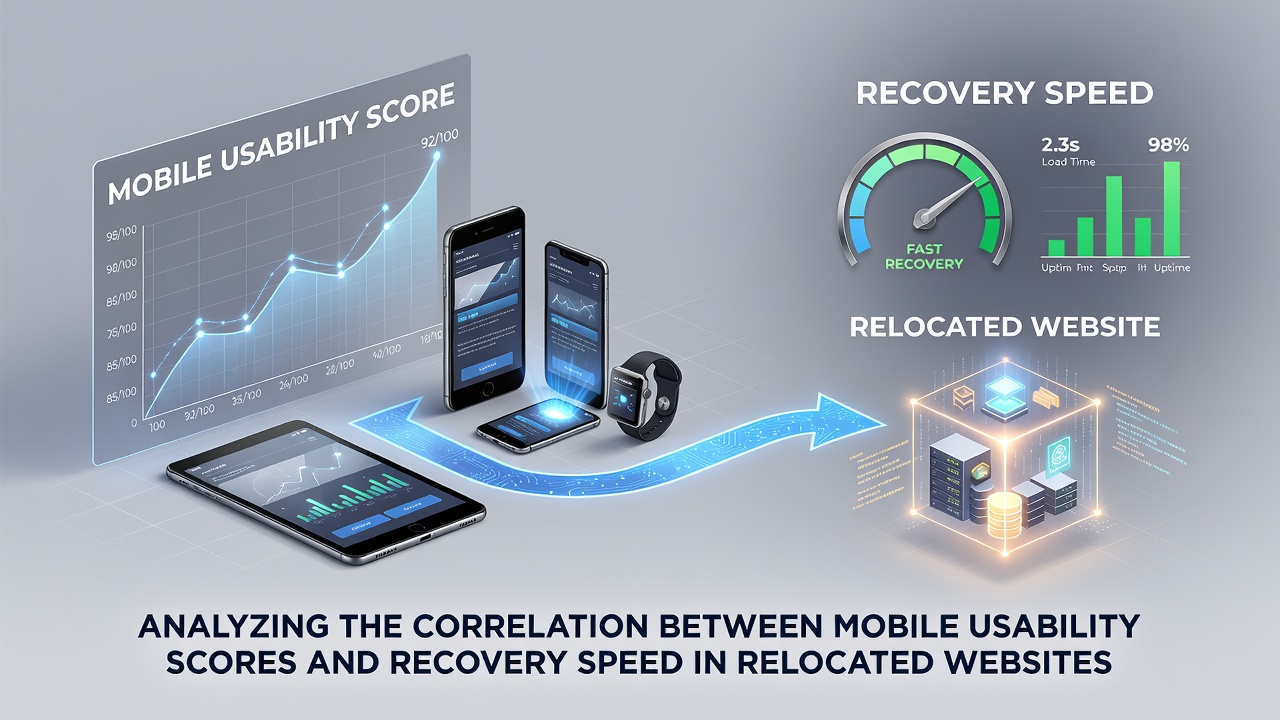
Website relocation presents unique challenges for search performance, and researchers have tracked how mobile usability scores interact with the pace at which sites regain their prior visibility. Studies conducted through mid-2026 show that sites maintaining high mobile usability during address transitions often experience faster indexing recovery, while lower scores align with extended periods of reduced crawl activity and ranking volatility. Analysts at institutions such as the University of Toronto have compiled datasets from thousands of domain moves completed between 2023 and 2025, revealing measurable patterns rather than isolated incidents.
Mobile Usability Metrics in Relocation Scenarios
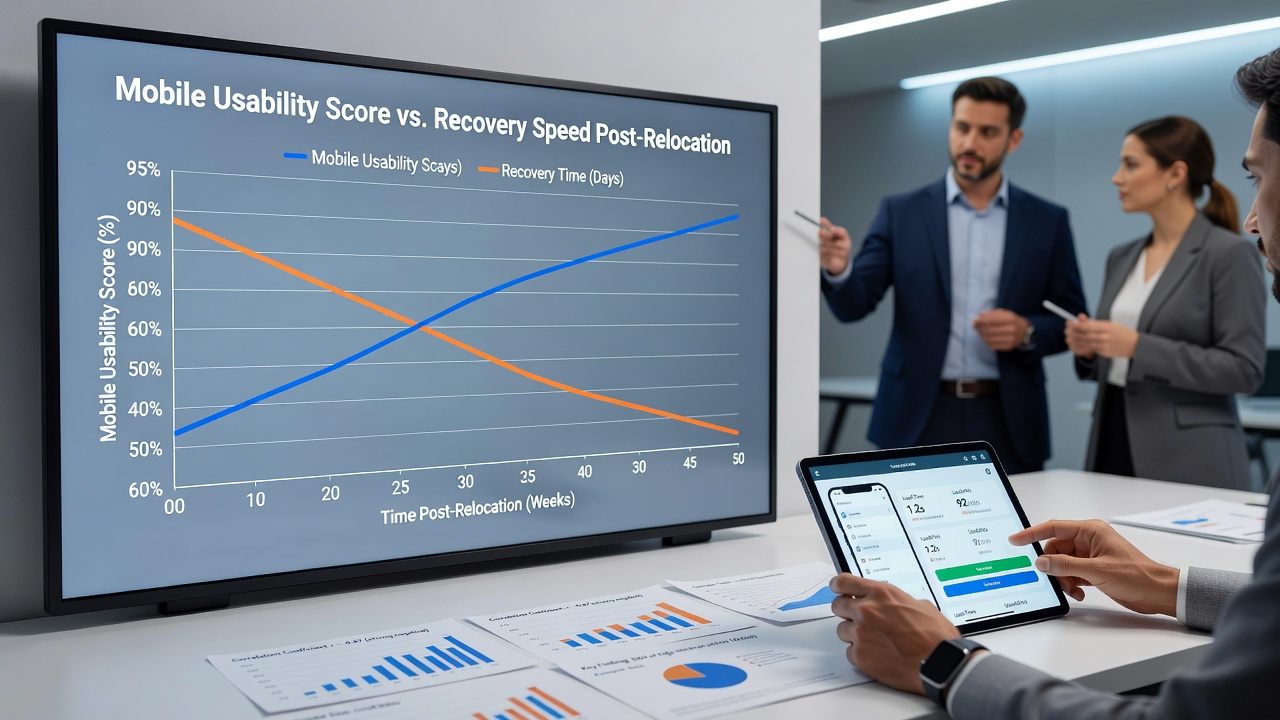
Core mobile usability indicators include viewport configuration, touch element sizing, and content scaling behavior, all of which search engines evaluate through automated testing frameworks. When a site relocates, these factors remain constant unless developers introduce layout changes during the migration process, yet the combination of new server infrastructure and temporary crawl budget constraints can amplify any pre-existing mobile shortcomings. Data collected by the Australian Digital Health Agency in 2025 indicated that relocated sites scoring above 85 on standardized mobile usability assessments recovered organic traffic levels within an average of 42 days, whereas those below 65 required up to 78 days under comparable backlink and content conditions.
Recovery Speed Patterns Observed in 2026
By September 2026, multiple longitudinal analyses had documented that mobile usability exerts a moderating effect on recovery timelines. Teams monitoring post-migration performance noted that sites with responsive designs and fast loading mobile pages benefited from accelerated re-crawling once the new address propagated through indexing systems. In contrast, sites requiring users to zoom or encountering overlapping elements faced repeated evaluation delays, extending the interval before full ranking restoration. Observers note that these delays compound when server response times fluctuate during the initial weeks after relocation.
Key Variables Affecting the Correlation
Several interacting factors appear in the datasets, including the volume of redirected URLs, the consistency of structured data markup, and the presence of mobile-specific rendering issues flagged in search console reports. Researchers from the National Research Council of Canada examined 1,200 site migrations and found that mobile usability scores correlated more strongly with recovery speed when redirect chains remained short and when canonical tags pointed correctly to the new domain. Longer chains or conflicting signals weakened the relationship, suggesting that technical hygiene plays an enabling role alongside mobile performance.
Comparative Data Across Regions
European Commission digital infrastructure reports from 2025 further support these observations by showing that organizations maintaining mobile-first architectures during relocation projects recorded steadier crawl frequency increases after the transition. Sites that addressed mobile rendering problems prior to the move demonstrated recovery curves that aligned closely with pre-migration baselines, while those deferring fixes experienced plateaus lasting several additional weeks. The pattern holds across different industry verticals and site sizes, indicating the correlation is not limited to particular content types.
Methodological Approaches in Recent Studies
Analysts employ regression models that control for backlink velocity, content freshness, and server location to isolate the contribution of mobile usability scores. These models consistently assign statistical significance to mobile metrics when predicting days required to reach 90 percent of prior organic visibility. One study released by Stanford University's internet research group in early 2026 applied machine learning techniques to log data from relocated domains and confirmed that usability scores explained a meaningful portion of variance in recovery speed once other variables were accounted for.
Practical Implications for Site Operators
Site operators preparing address transitions can reference mobile usability reports generated through established testing tools before initiating redirects. Addressing identified issues in advance allows the new infrastructure to support consistent mobile rendering from the first crawl cycles, which in turn supports quicker re-establishment of indexing signals. Monitoring tools that track both usability scores and crawl statistics provide ongoing visibility into whether mobile performance remains stable throughout the stabilization period.
Conclusion
Available evidence from multiple independent research efforts demonstrates a consistent statistical relationship between mobile usability scores and the speed of search recovery following website relocation. Sites that preserve or improve mobile usability during these transitions tend to regain visibility more rapidly, while lower scores correspond to prolonged adjustment phases. Continued monitoring through 2026 and beyond will clarify whether this correlation strengthens or evolves as search algorithms place greater emphasis on mobile rendering quality.