Vera Ludwig · 9 October 2026
Examining Shifts in Referral Traffic Sources During Platform Migrations
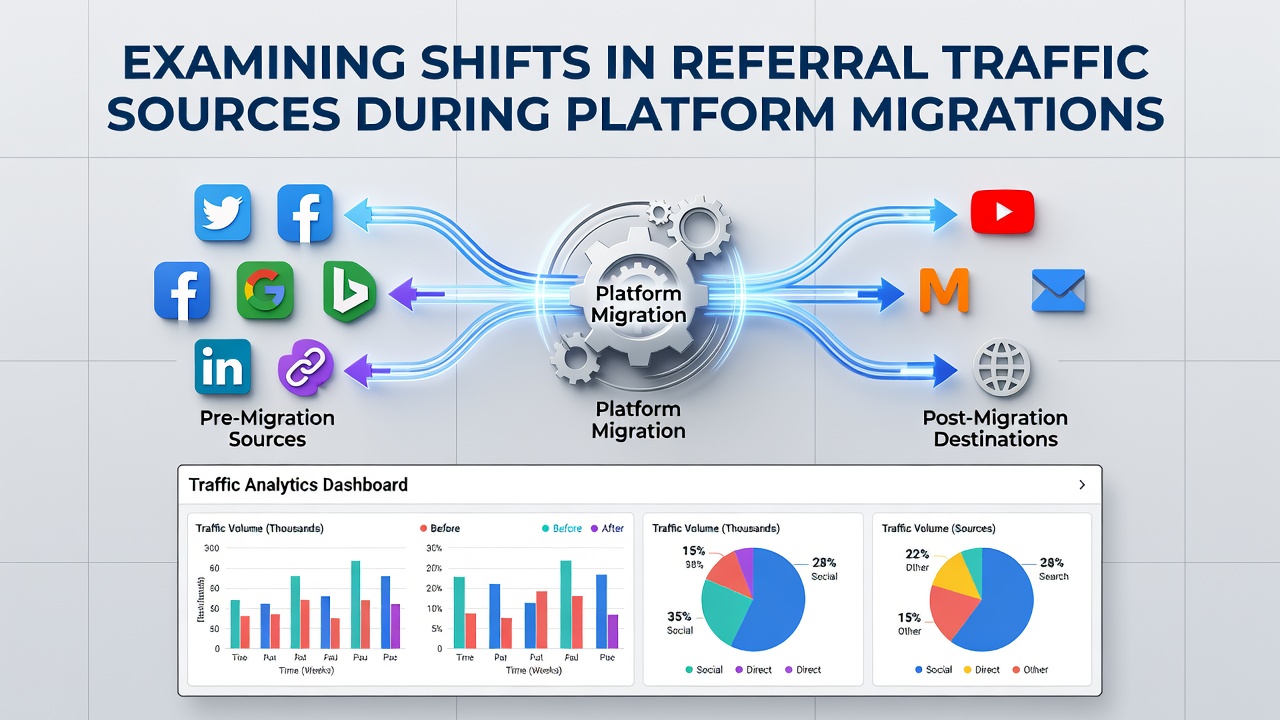
Platform migrations involve moving websites between content management systems, hosting environments, or e-commerce frameworks, and these transitions frequently alter how referral traffic arrives from external domains. Referral sources include social media platforms, news outlets, partner sites, and directory listings that send visitors through hyperlinks, yet the technical details of a migration can redirect, break, or reattribute those visits in measurable ways. Observers note that URL structures often change during such moves, which means embedded links on third-party sites may point to pages that no longer resolve or that now carry different canonical tags.
Technical Factors That Influence Referral Attribution
Server-side redirects play a central role because they determine whether an incoming referral from an old URL passes its source information to the new platform or gets filtered through an intermediate page. When 301 redirects are implemented correctly, analytics tools still record the original referrer, but incomplete redirect maps or JavaScript-based navigation can strip that data and register visits as direct traffic instead. Data from migration audits conducted through 2026 shows that sites using single-page application frameworks after the switch often experience a temporary drop in identifiable referral sessions until tracking scripts are reconfigured to capture referrer headers consistently.
Changes in tracking implementation also contribute to shifts because new platforms may default to different analytics configurations or require updated measurement protocols. Researchers have documented cases where referral parameters from social networks failed to register after a migration because the new site blocked certain query strings or altered how cookies were set across domains. In October 2026, several enterprise migrations revealed that referral traffic from regional news portals dropped sharply until cross-domain tracking settings were aligned between the legacy and replacement systems.
Observed Patterns in Source Distribution
Long-term data sets collected by web analytics providers indicate that social media referrals tend to recover faster than those from niche industry blogs because major platforms automatically update link previews and share cards when new URLs are detected. In contrast, smaller referral domains often retain outdated links for months, creating a lag that appears in traffic reports as a gradual rather than abrupt return to baseline levels. Studies compiled by academic teams tracking digital transitions have found that referral traffic from government and educational domains shows greater stability during migrations because those sites maintain link directories with slower update cycles.
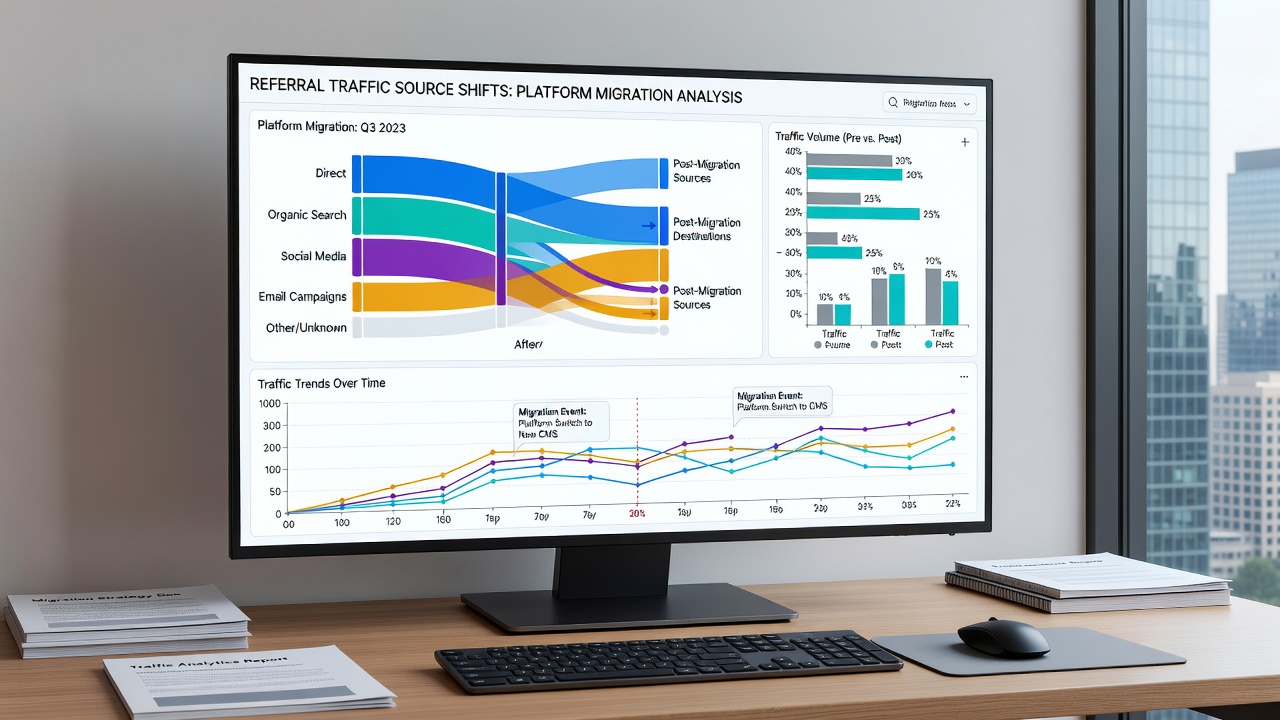
Platform-specific features introduce additional variables because migration to a new e-commerce or publishing system may replace embedded sharing buttons or affiliate modules that previously carried referral attribution. When these modules are swapped, the new code sometimes omits UTM parameters or canonical references that earlier versions used, which fragments how downstream analytics categorize the visit. Evidence gathered from multiple site transitions demonstrates that referral traffic from affiliate networks can shift toward direct or organic categories if the migration alters how session cookies are passed between domains.
Recovery Timelines and Measurement Adjustments
Recovery timelines vary according to how quickly external sites update their outbound links and how thoroughly the migrating team audits incoming referral paths beforehand. Teams that map high-value referring domains before the switch and request link updates from those partners often see referral volumes stabilize within four to six weeks, whereas migrations without such outreach experience longer plateaus. Reports from the OECD digital economy outlook highlight similar patterns across industries where structured pre-migration audits correlate with faster restoration of external traffic streams.
Analytics adjustments become necessary because new platforms may introduce different default behaviors around referrer policy headers, which control how much source information browsers transmit. Changing the referrer policy from strict-origin-when-cross-origin to a more permissive setting can restore visibility into previously masked referral domains, yet such changes require careful testing to avoid unintended data exposure. In October 2026, migration specialists noted that sites adopting stricter security headers during platform updates frequently observed an initial rise in direct traffic classifications until referrer policies were recalibrated.
Geographic and Sector Variations
Regional differences appear in how referral sources respond because link curation practices differ across markets and industries. Data compiled by Statistics Canada on Canadian digital enterprises shows that referral traffic from domestic media outlets recovered more slowly after migrations than traffic from international social platforms, largely due to slower indexing cycles at local news aggregators. European academic studies have recorded parallel trends where educational and research site referrals remained steadier across migrations compared with commercial partner links.
Sector-specific factors further shape outcomes because news and publishing platforms often rely on real-time social referrals that adapt quickly, while B2B sites depend on directory and association links that update on quarterly schedules. Migration projects that preserve historical URL patterns through careful slug mapping tend to retain more referral continuity across both sectors, according to aggregated industry benchmarks released in 2026.
Conclusion
Platform migrations produce measurable changes in referral traffic sources through a combination of redirect behavior, tracking reconfiguration, and external link persistence. Organizations that audit referring domains, align analytics settings, and coordinate link updates with key partners document faster stabilization of referral volumes. Continued monitoring of referrer headers and source attribution after the transition remains essential for distinguishing genuine traffic shifts from measurement artifacts introduced by the new platform environment.