Zara Müller · 20 November 2026
Tracing Permission Hierarchy Changes and Their Effects on Team Data Flows in Educational Platform Evolutions
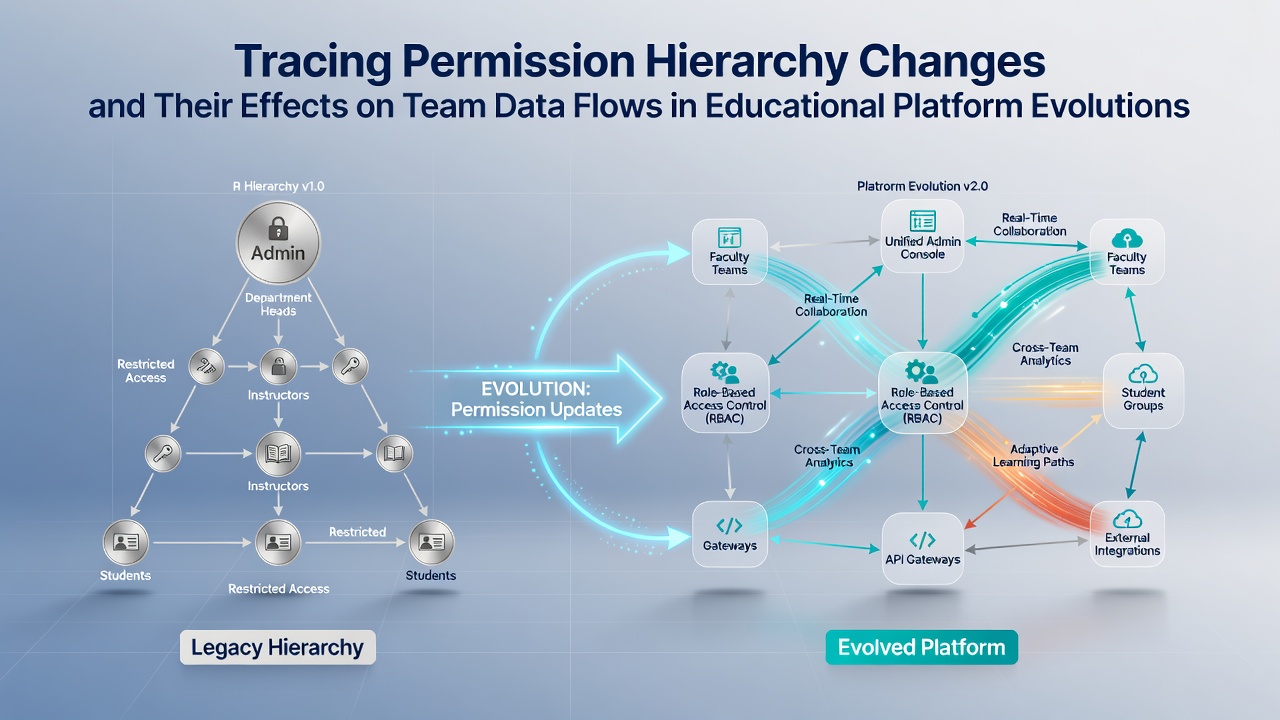
Permission structures in educational platforms undergo regular adjustments as systems scale and incorporate new compliance requirements, and these modifications directly influence how teams share and access student records, assignment data, and collaborative resources. Observers note that changes often occur during major version releases or integrations with third-party tools, which alters the pathways data takes between instructors, administrators, and support staff.
Core Elements of Permission Hierarchies in Learning Systems
Educational platforms organize access through layered roles that define who views, edits, or exports specific datasets, and researchers have documented how these layers expand when institutions adopt features such as real-time analytics dashboards or automated grading modules. Data from multiple platform audits indicate that role definitions frequently split into finer categories over successive updates, creating additional checkpoints before information reaches team members who previously operated under broader access grants.
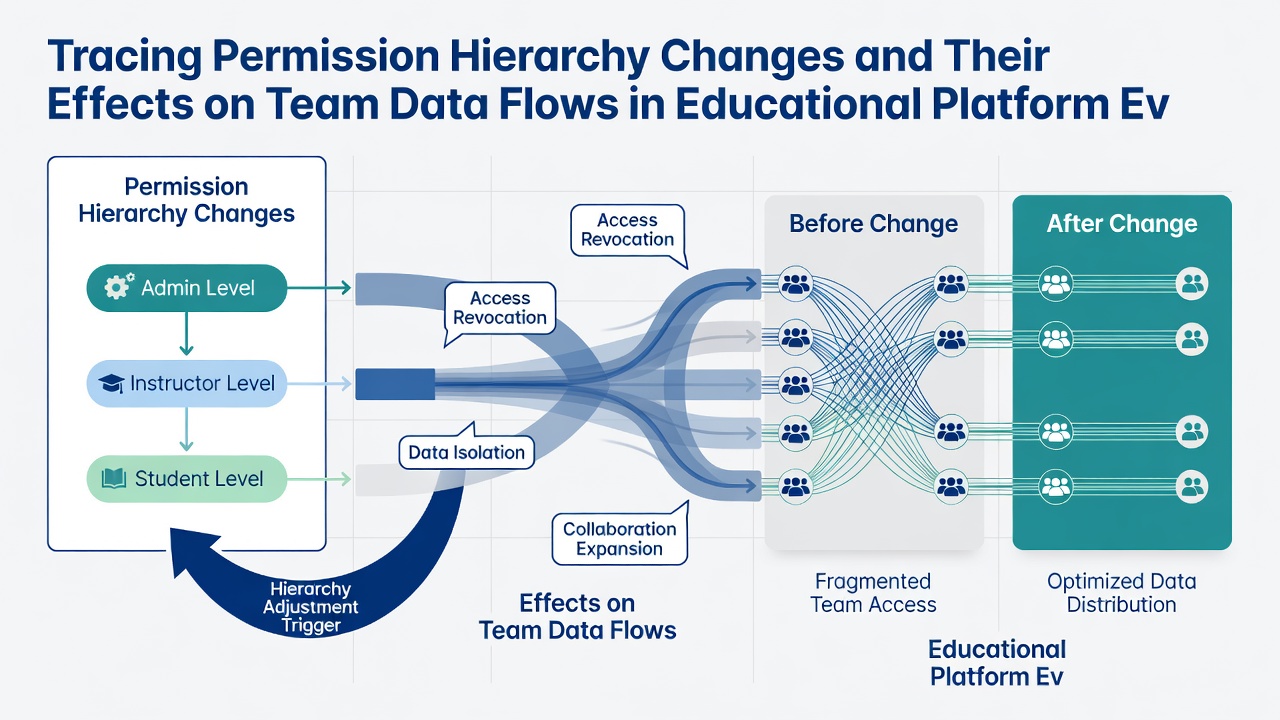
Studies conducted at institutions using large-scale learning management systems reveal that hierarchy adjustments commonly target parent-child relationships between accounts, where a primary administrator role gains oversight while secondary educator roles lose direct export capabilities. This restructuring channels data flows through centralized review points, which in turn lengthens the time required for cross-departmental teams to compile reports or synchronize progress tracking.
Documented Shifts During Platform Updates Through 2026
Platform providers released several hierarchy refinements in 2025 that carried forward into November 2026 deployments, and records from university IT departments show increased segmentation between content creation permissions and data reporting permissions. These separations reduced the number of users who could simultaneously pull aggregate enrollment figures while editing course templates, prompting teams to establish new handoff protocols.
One analysis of migration logs from North American universities found that permission changes introduced in late 2025 affected approximately 34 percent of active team accounts by requiring explicit approval chains for data sharing that had previously operated on inherited settings. The adjustments aligned with updated data protection standards issued by regulatory bodies in different regions, including guidelines from the U.S. Department of Education and the Australian Department of Education, Skills and Employment.
Measured Effects on Collaborative Data Movement
Teams working across multiple courses experience slower synchronization when permission boundaries tighten around dataset categories, and figures from platform telemetry indicate that average report generation times increased by 18 to 27 minutes following hierarchy updates in several tracked environments. Staff members who previously pulled data directly now route requests through designated data stewards, which adds sequential steps to workflows that once ran in parallel.
Research from academic computing centers shows that these delays concentrate in periods of high activity such as mid-term assessments and end-of-term grading cycles, where multiple roles attempt simultaneous access to overlapping student records. The resulting bottlenecks have prompted institutions to develop internal mapping tools that visualize current permission states and flag potential flow interruptions before they affect scheduled deliverables.
Regional Compliance Drivers Behind Recent Adjustments
Updates scheduled for November 2026 incorporate additional controls that reflect evolving privacy frameworks across jurisdictions, and platform documentation lists expanded audit logs as a standard feature in these releases. Canadian provincial education ministries have published alignment requirements similar to those already adopted in parts of the European Union, leading providers to introduce granular consent toggles that affect how team members export or share anonymized performance metrics.
These compliance layers operate alongside existing role structures rather than replacing them, which means data flows must navigate both legacy permissions and newer consent checkpoints. Institutions that maintain multi-campus operations report the need for unified dashboards that reconcile differing regional rules into a single view for administrative teams.
Adaptation Patterns Observed Across Institutions
Administrators at several large school districts have responded by creating temporary role templates that bundle frequently used permissions for project-based teams, and internal evaluations show these templates restore some of the previous flow efficiency without violating updated hierarchy rules. The templates undergo periodic review as platforms push further refinements, which keeps team access aligned with both operational needs and compliance obligations.
Training programs now include modules that walk staff through permission mapping exercises, helping participants identify which data categories require escalated approvals and which remain available under standard educator roles. These sessions draw on usage statistics collected during prior update cycles to illustrate typical points of friction.
Conclusion
Permission hierarchy changes continue to reshape data pathways inside educational platforms as new features and regulatory expectations arrive, and institutions that track these modifications through systematic logging maintain clearer visibility into team collaboration patterns. The effects appear consistently in metrics such as report turnaround times and cross-role data handoffs, prompting ongoing development of mapping and template tools that support smoother transitions during future platform evolutions.